
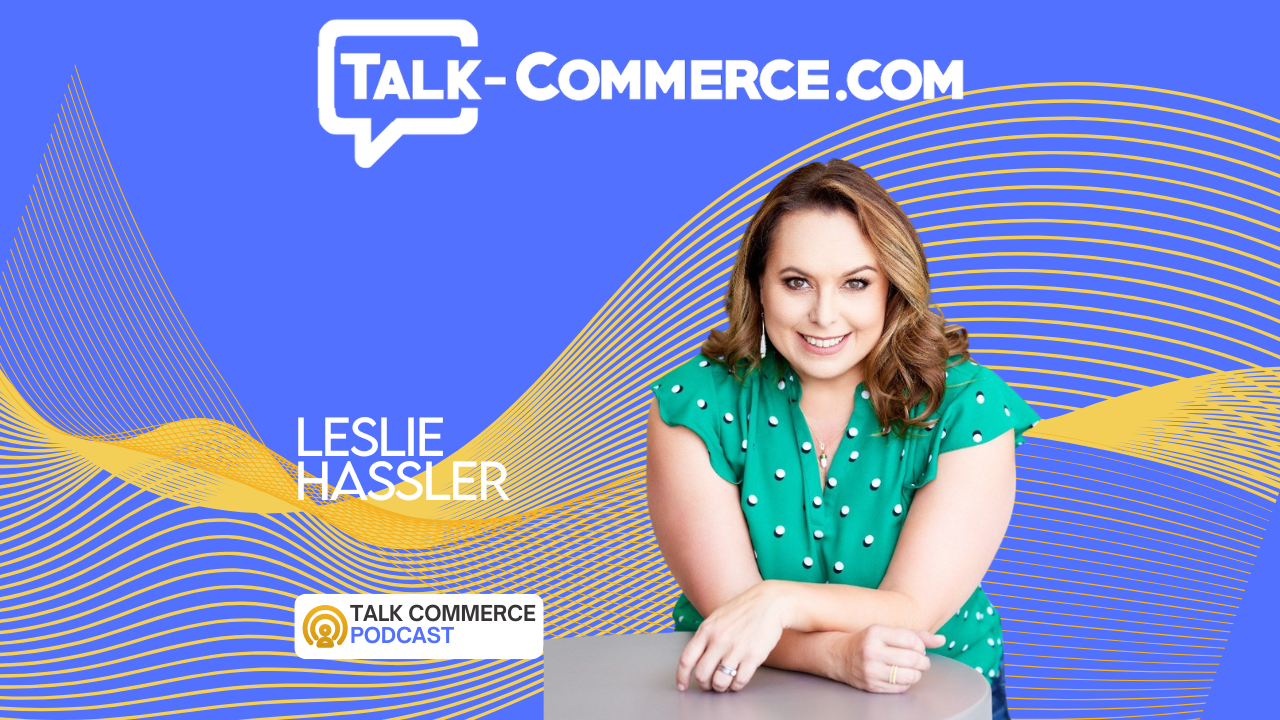
Strategic Resilience and the Reality of AI Implementation with Leslie Hassler
In this episode of Talk Commerce, host Brent Peterson sits down with Leslie Hassler, president and founder of YourBizRules, to discuss the critical elements of building scalable businesses in an era of constant change. The conversation explores fractional leadership roles, the proper implementation of AI in business operations, and the necessity of strategic planning over reactive management. Leslie brings over a decade of experience helping companies achieve profitable growth while improving owner quality of life.
Key Takeaways
- Structure should set you free, not constrain you. Business operating systems like EOS, Scaling Up, or OKRs serve as frameworks, but they require strategic thinking and contextual application to generate results.
- Measure what matters, not everything. Focus on identifying one leading metric that can serve as your business dial rather than tracking dozens of lagging indicators.
- AI requires human expertise to deliver quality outcomes. Generative AI tools produce generic content without proper context, expertise, and intentional training on your unique voice and business needs.
- Chunk your AI usage into separate threads for research, synthesis, and content creation to maintain quality and prevent the system from becoming confused by complexity.
- Strategic resilience beats reactive management. Building businesses that can adapt to changes like tariffs, economic shifts, or market disruptions requires forward-thinking planning rather than wishing for yesterday’s conditions.
- Opportunity emerges during disruption. While others complain about challenges, strategic business owners position themselves to capture market share and talent when competitors falter.
About Leslie Hassler
Leslie founded YourBizRules in 2014 after asking herself what she wanted to be when she grew up. With a journalism degree and a passion for business strategy, she discovered she loved business itself more than any specific industry. That realization led to the creation of a company that serves as a fractional C-suite for growing businesses. Leslie describes herself as someone who geeks out on business and thinks about it constantly. Her team at YourBizRules focuses on keeping strategies real, practical, implementable, and approachable for business owners navigating growth challenges. Based in Dallas, Leslie balances her strategic work with a passion for quality wine, declaring herself too old for bad vintages. Her approach combines scraped knees and bruised elbows from real-world experience with sophisticated frameworks for business transformation.
Episode Summary
The conversation begins with Leslie explaining how YourBizRules operates as a fractional C-suite provider for companies before they can afford full-time executive leadership. Her team embeds expertise in areas including CEO, CFO, COO, marketing, and HR functions. Leslie notes that clients typically approach them with one major need, but solving that problem inevitably reveals interconnected challenges requiring holistic solutions.
When discussing business frameworks, Leslie emphasizes that her firm remains system-agnostic. The choice between EOS, Scaling Up, the Great Game of Business, or other methodologies matters less than selecting a system that aligns with the owner and company culture. She warns against mistaking structure for strategy, noting that frameworks provide baseline organization but cannot replace strategic thinking.
The conversation shifts to AI implementation, where Leslie shares that her team has worked extensively with AI for three years but maintains a healthy skepticism. She explains that AI systems optimize for the quickest, shortest answers due to energy consumption constraints. One chat thread can consume a bottle of water in computational resources, forcing efficiency that sometimes sacrifices quality. Leslie observes that each major ChatGPT release results in approximately six months of reduced quality before stabilization.
Leslie describes her methodology for effective AI usage. She invests significant time teaching AI tools her tone and vernacular. She chunks complex projects into separate threads, using one for research, another for synthesis, and others for specific outputs. This approach prevents the system from becoming overwhelmed by multiplicity. She stresses that expertise remains essential because most users lack the sophistication or premium subscriptions needed to handle truly complex requests.
Brent raises concerns about AI enabling entrepreneurs to think they can handle everything independently, particularly in content creation. Leslie agrees, noting that content increasingly sounds generic. She coins the phrase “generic and junk food content” to describe AI-generated material lacking personality and context. She argues that when businesses sound like everyone else, ideal clients cannot distinguish between options. Maintaining individuality becomes more critical as the marketplace floods with similar content.
The discussion turns to predictions for the coming year. Leslie reframes the question, arguing that whether the crisis involves tariffs, COVID, or other disruptions, the real trend businesses need to address involves becoming more strategic and less reactive. She contends that most business operations lag ten years behind current capabilities. Rather than preparing for specific scenarios, companies should build strategic resilience that enables them to respond to any challenge.
Leslie challenges the tendency to wish for yesterday or complain about today instead of charting paths forward. She points to Amazon Marketplace emerging from the 2000 dot-com bust as an example of innovation during disruption. She encourages business owners to identify people in their networks who remain calm during crises because those individuals likely already implement strategic planning that positions them to capitalize on opportunities when competitors struggle.
Throughout the conversation, Leslie emphasizes that simplicity drives results. Strategic plans that become too complex lose traction because daily business life already contains sufficient complexity. She advocates for breaking down businesses in ways that allow them to be rebuilt for resilience and responsiveness. Financial positioning matters as much as operational planning. Companies need cushions that enable them to view market disruptions as opportunities rather than threats.
Leslie describes her ideal client conversations as focusing on building strategic and resilient businesses rather than reacting to the crisis of the moment. She notes this approach feels unpopular in circles dominated by complaint and nostalgia. However, business owners who adopt forward-thinking strategies find themselves positioned to absorb market share, attract quality talent, and expand when others contract. The goal involves reaching a point where inserting any challenge into a blank produces a response of having already planned for that scenario. Leslie Hassler makes clear that she lacks a crystal ball but believes insightful strategy creates flexibility to respond to both opportunities and detractions. Her team at YourBizRules works to transform businesses through improved cashflow, profitability, and growth while enhancing owner quality of life. The conversation concludes with Leslie offering resources through yourbizrules.com/UE, including access to books like “First This Then That” and opportunities to schedule strategic discussions.
Final Thoughts
The conversation with Leslie reveals that business success in turbulent times requires more than reacting to headlines about tariffs or economic shifts. Strategic resilience emerges from intentional planning, appropriate use of technology like AI, and willingness to build businesses that can adapt regardless of external conditions. Rather than hoping for a return to simpler times, forward-thinking owners position themselves to capture opportunities that disruption creates. The question becomes whether you will spend your energy complaining about today or building the strategic frameworks that ensure your business rules tomorrow’s marketplace.
Follow Talk Commerce on your favorite platform:
- YouTube: https://www.youtube.com/@talkcommerce
- Bluesky: https://bsky.app/profile/talkcommerce.bsky.social
- Apple Podcasts: https://podcasts.apple.com/us/podcast/talk-commerce/id1561204656
- Spotify: https://open.spotify.com/show/7Alx6N7ERrPEXIBb41FZ1n
- Twitter: @talkingcommerce
- LinkedIn: https://www.linkedin.com/company/talk-commerce
- Facebook: https://www.facebook.com/talkingcommerce
- Website: https://talk-commerce.com/