
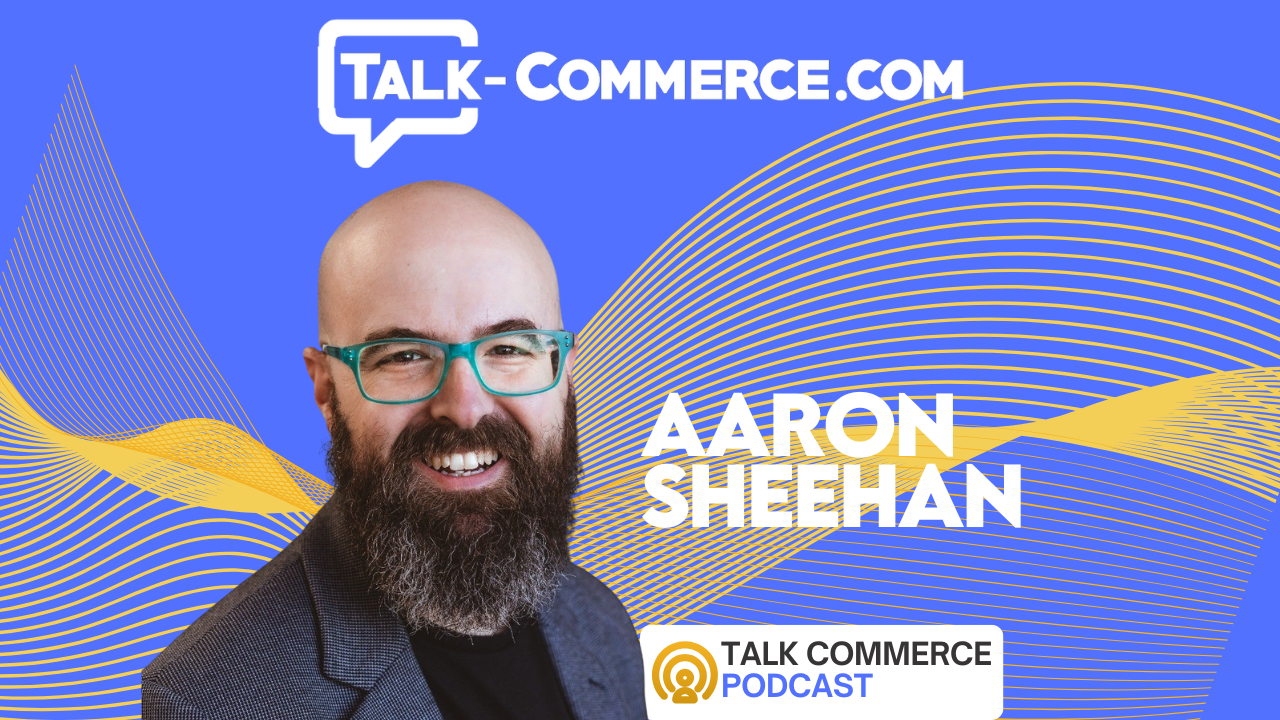
In a recent episode of Talk Commerce, I had the pleasure of speaking with Aaron Sheehan, Head of Product Marketing at OroCommerce, about the unique challenges and opportunities in B2B e-commerce. Having worked with B2B platforms myself over the years, including early implementations of Oro CRM, I was fascinated by Aaron’s perspective on how B2B commerce fundamentally differs from its B2C counterpart.
Aaron brings a wealth of experience to this conversation, having witnessed the evolution of B2B e-commerce from both the agency side and now as a platform provider. His insights challenge conventional wisdom about what makes e-commerce successful.
The Friction Paradox: Why B2B Buyers Actually Need Obstacles
One of Aaron’s most compelling points centered on friction in the buying process. While B2C e-commerce has obsessed over creating what he colorfully described as a “waterslide greased with Crisco” experience, B2B operates by entirely different rules.
“In B2B, people are buying for their job,” Aaron explained. “They’re buying because they have to buy from you.” This fundamental difference means that friction isn’t just acceptable—it’s often necessary.
In my experience implementing B2B platforms, I’ve seen this firsthand. B2B transactions require:
- Approval workflows
- Compliance checks
- Correct payment methods
- Proper shipping addresses
- Quality control steps
Aaron emphasized that B2B commerce is “a team of people buying from a team of people,” which inherently creates complexity that can’t be eliminated—only optimized.
The Hidden Revenue Leak: When “Same as Last Time” Costs Millions
Aaron shared a scenario that resonated deeply with my agency experience: companies with massive catalogs watching customers order the same handful of items month after month.
“I’ve had conversations with companies that have catalogs of 500,000 SKUs, but their customers just buy the same 10 every month,” Aaron noted. “They call the rep and say, ‘Give me the same as I had last time.’ Done.”
This revelation highlights a massive missed opportunity. Traditional phone-based ordering, despite feeling more “consultative,” often becomes simple order-taking. E-commerce platforms change this dynamic by:
- Surfacing entire product categories customers didn’t know existed
- Implementing “people who bought this also bought that” recommendations
- Presenting cross-sell opportunities at the perfect moment
The result? Same customers, same frequency, but dramatically higher average order values.
The Sales Rep Revolution: From Order Taker to Revenue Generator
A common fear I’ve encountered when implementing B2B e-commerce is that technology will replace sales representatives. Aaron’s perspective flips this concern entirely.
“Most companies have cottoned to the idea that their sales team needs to be compensated on e-commerce orders,” Aaron explained. Rather than threatening sales jobs, e-commerce makes sales reps more valuable by eliminating manual order entry and freeing them for higher-value activities.
I’ve witnessed this transformation myself. Sales reps who once spent evenings transcribing orders from briefcases into ERPs now focus on relationship building and consultative selling. The technology handles the routine, while humans handle the complex.
The B2B E-commerce Wave Has Finally Broken
Perhaps the most exciting insight Aaron shared was about the fundamental shift happening in B2B commerce conversations.
“The conversations we’re having now at Oro are very different from the conversations we were having two or three years ago,” Aaron observed. “We’re not having to prove the value of e-commerce to companies as much anymore. It’s a given.”
This shift represents years of market education finally paying off. Companies now assume value exists in digital commerce, CRM integration, and automation. The question has evolved from “Should we?” to “How fast can we?”
The Platform Evolution: From Magento to Modern B2B Solutions
Our conversation naturally touched on the Magento ecosystem, given both our backgrounds. Aaron’s journey from working with early Oro CRM partnerships to his current role illustrates the maturation of B2B commerce platforms.
Aaron praised teams like Hyvä for “saving Magento” by addressing longstanding frontend challenges, while positioning OroCommerce as the “front end to your ERP” without per-seat licensing costs that traditional ERPs impose.
AI and the Future of B2B Commerce
While discussing AI’s role in B2B commerce, Aaron struck a realistic tone about agentic buying. Trust remains paramount in B2B transactions where wrong purchases can shut down operations.
“AI still has a tendency to hallucinate when confronted with incomplete information,” Aaron noted. “If I don’t get the right products in the right quantities for the right application, I go out of business.”
However, AI excels as a UX layer, helping buyers navigate complex catalogs and find relevant products faster than traditional browsing methods.
The Cultural Component: Why Humans Still Matter
Aaron made a profound observation about commerce being inherently cultural. Even in efficiency-focused B2B environments, the human element remains crucial for trust-building and relationship maintenance.
“Commerce is culture,” Aaron referenced from Future Commerce. “We like shopping. We engage in commerce. Even in B2B, there’s usually a point where that buyer wants to pick up the phone and talk to someone.”
This insight reinforces that successful B2B e-commerce isn’t about replacing human interaction—it’s about optimizing when and how those interactions occur.
Embracing B2B Commerce Complexity
My conversation with Aaron Sheehan reinforced that B2B e-commerce success requires embracing, not eliminating, complexity. The platforms that thrive understand that B2B buyers need sophisticated workflows, approval processes, and integration capabilities that go far beyond simple product catalogs.
As Aaron noted, the wave in B2B e-commerce has finally broken. Companies are ready to invest in digital transformation, and the platforms that can handle true B2B complexity while delivering modern user experiences will capture this opportunity.
For anyone considering B2B e-commerce implementation, Aaron’s insights provide a roadmap: focus on your specific industry, embrace necessary friction, empower your sales team, and remember that at the end of the day, B2B commerce is still fundamentally about relationships between people.
Listen to the full Talk Commerce episode with Aaron Sheehan to dive deeper into these B2B e-commerce strategies and learn more about OroCommerce’s approach to solving complex B2B challenges.
Listen to more conversations about digital trsnsformation here