
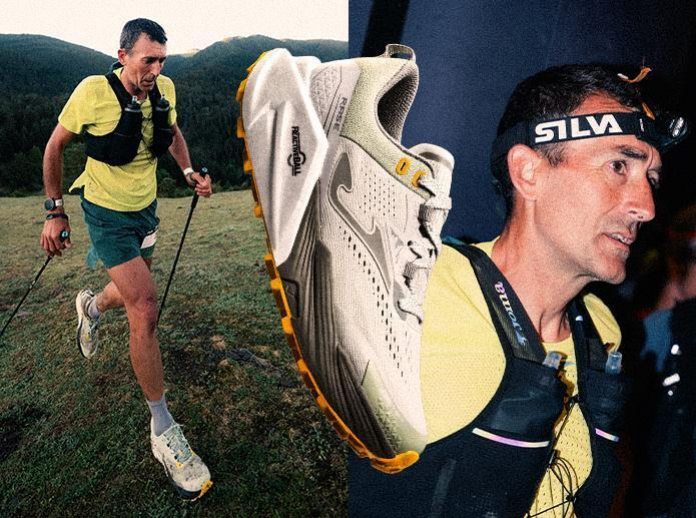
Joma Splits the Rase Midsole in Two as Miguel Heras Returns to Racing
Nearly a decade after the Rase helped start Joma’s trail running range, Joma has rebuilt the shoe around a two-zone midsole, and Miguel Heras wore the new version for his return to racing at Ultra Pirineu 2026.
The Rase was among the first models Joma used to build out its trail running line, a competition shoe whose early editions were built around stability and protection. Joma laid out the story of its current generation on October 28, 2026, in a release from the Secreto a Voces agency, and the shoe that comes out of it keeps the elements runners recognize from the first versions while cutting weight and widening the range of running it is built for, from long training runs to ultra-distance races.
What Changed in the New Rase
Joma compared its earliest versions of the Rase with the current model and lists four improvements, reduced weight, better distribution of protection, cushioning tailored to each phase of the stride, and a better response on the terrain. Three parts of the shoe carry those changes.
- Upper. Breathable mesh has been part of the Rase since its earliest versions. The current model uses a lighter, more technical mesh, with reinforcements placed in the areas most exposed to abrasion and friction, which lightens the build and keeps protection where the shoe takes the most strain.
- Midsole. Joma calls this the most significant change. The first Rase models used a single piece of phylon with a stabilizing plate in the midfoot. The new version divides the midsole into two zones, with Reactive Ball in the rear to absorb impact, recover its shape and help generate propulsion, and phylon in the forefoot for stability and a smoother transition.
- Outsole. The Durability rubber outsole is the link between the two generations. Its resistance to wear remains one of the defining features of the Rase, and Joma reworked the lug structure to improve grip across different surfaces.
Miguel Heras Took It Back to Racing
Miguel Heras chose the new generation of the Rase for his return to competition at Ultra Pirineu 2026. He finished eighth on the alternative course of about 60 kilometers, in an edition of the race affected by the risk of severe storms.
“With the Rase, I don’t have to think about my feet. It’s comfortable, stable and lightweight, which is exactly what I need from a shoe after hours in the mountains,” Heras said.
Joma calls Heras a trail running legend and one of Spain’s most experienced trail runners, and says he brings a perspective grounded in real use, long hours on the terrain, changes of pace and a stride that shifts as fatigue sets in.
What This Means for Running Retailers
A model that stays in a line for close to ten years gives a specialty running store a reference point, since a runner who wore an early Rase can compare it with the new one and feel what the split midsole and lighter mesh change. Joma positions the shoe for long training runs and ultra-distance races. The weight, cushioning and grip claims are Joma’s own, and the release does not give weights, stack heights or prices.
Joma’s trail running range is on the Joma website. The release came to Talk Commerce from Kathia Garrido at Secreto a Voces Agency.