
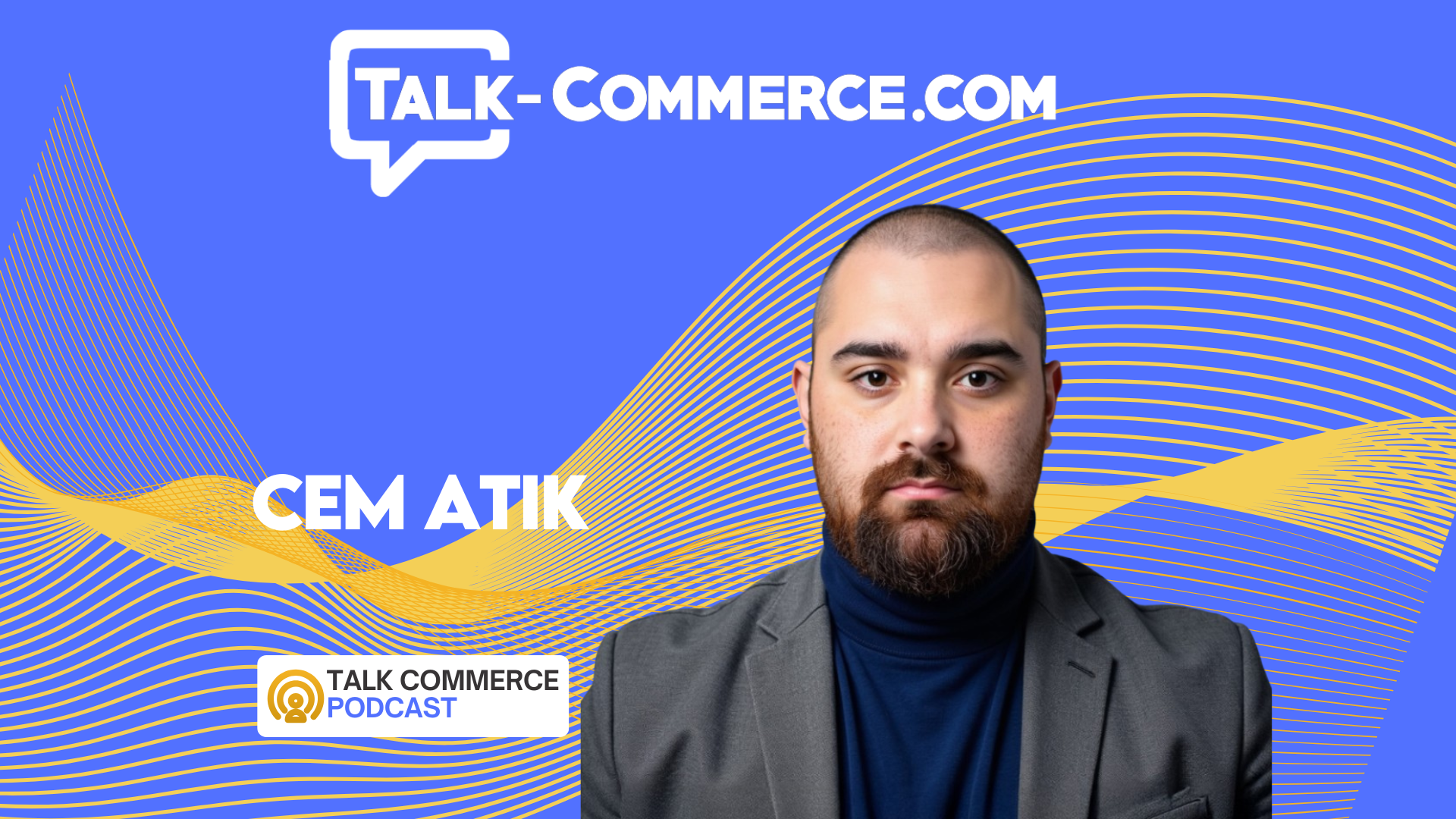
Brent Peterson sits down with Cem Atik, the CMO and co-founder of Harucon-Ventures. In this conversation, Cem shares his framework for transforming marketing from a guessing game into a structured profit control system. From unit economics to the smart use of AI in modern ecommerce operations, Cem breaks down how brands can stop flying blind and start making truly data-driven decisions. Plus, listeners get a candid look at where AI genuinely helps, where it falls short, and why human creativity still holds tremendous value.
Key Takeaways
- Marketing starts with unit economics. Every leader should know their cost per acquisition, cost of goods sold, fulfillment costs, and shipping expenses without hesitation.
- Patterns repeat across brands. Most ecommerce businesses face the same recurring issues, and identifying those patterns is the foundation of scalable growth.
- Benchmarks matter. Knowing industry ranges (like cost of goods sitting between 15% and 25%) helps quickly flag what needs fixing.
- AI is a mirror, not a magician. It reflects the quality of your input, and mistakes usually stem from communication gaps rather than the tool itself.
- Emotion sells. Solution-driven and feeling-driven ad copy outperforms generic messaging by wide margins.
- Humans remain essential. Creativity, judgment, and strategic decision-making still require a human touch.
About Cem Atik
Cem serves as the CMO and co-founder of Harucon Ventures, where the team applies a buy-and-build strategy to ecommerce, similar to what other investors do in real estate. His approach blends operational rigor with a passion for helping brands unlock hidden profitability through better data structure and thoughtful AI adoption.
Episode Summary
Cem explains how he began developing his profit growth engine framework roughly seven years ago. Back then, spreadsheets ruled the day, and pulling meaningful insights out of raw data was painstaking. Over time, he noticed something remarkable: brands, regardless of size or category, tended to struggle with the same core issues. That realization led him to build a repeatable pattern he could apply across accounts of all sizes.
At the heart of his approach sits unit economics. Cem is emphatic that if a founder or marketer can’t rattle off their cost per acquisition instantly, something is wrong. He walks Brent through the metrics leaders often overlook, including the true landed cost of a product from manufacturing all the way to the customer’s doorstep. Most teams track these expenses separately, but Cem argues they should be viewed as one unified figure.
He shares a practical example involving a brand shipping products from China to the UK. By having the packaging finalized in China rather than at the UK fulfillment center, the brand saved roughly four dollars per package. Small operational shifts like that, guided by benchmarks, can dramatically reshape profitability.
The conversation then pivots to AI. Cem admits he’s spent countless late nights exploring the technology and considers himself somewhat addicted to it. However, he cautions that AI is only as effective as the person guiding it. Every number gets double-checked at least twice, because AI lacks emotional intelligence. He gives a compelling example: if a new ad shows a very high click-through rate but no sales, AI might automatically cut it. A human marketer, however, might recognize that the audience (say, women dealing with back pain) is signaling strong intent, and the real fix might be on the landing page or in giving the campaign more time.
Brent and Cem then discuss messaging and creative performance. Cem observes that click-through rates aren’t collapsing across the board; rather, the gap between excellent ads and mediocre ads is widening. Generic headlines like “brand’s official store” simply don’t compete against emotionally resonant copy such as “solve your back pain issues in no time.” On accounts running emotionally driven products, Cem says CTRs frequently land between 15% and 25%, well above the typical Google benchmark of 2% to 5%.
The dialogue eventually turns philosophical. Both hosts agree that AI will reshape workflows, particularly repetitive manual tasks in industries like accounting, plumbing, and trades. Yet Cem pushes back on the notion that AI will replace humans entirely. As he puts it, “AI is still your mirror and it’s acting like you want to like him act.” Creativity, intuition, and genuine human collaboration remain irreplaceable, at least for now.
Brent wraps up by echoing that sentiment. A team of humans, he argues, will still generate ideas that no bot could produce alone. Marketers who lean too heavily on AI risk becoming administrators rather than creators.
As the episode closes, Cem shares what excites him most for the year ahead: watching more people invest the time to actually understand AI and use it wisely, not just as a shortcut, but as a genuine leverage tool.
Final Thoughts
This episode delivers a refreshing reminder that behind every dashboard, ad campaign, and AI prompt sits a very human decision. Cem Atik makes a compelling case that marketing shouldn’t be treated as a cost center or a creative afterthought, but as a profit control system built on discipline, clarity, and emotional intelligence. So, as you plan your next campaign, ask yourself: are you truly in control of your marketing, or is your marketing quietly controlling you?
Connect with Cem on LinkedIn: https://de.linkedin.com/in/cem-atik
This has been produced in cooperation with Content Cucumber
https://www.contentcucumber.com/
Follow Talk Commerce on your favorite platform:
- YouTube: https://www.youtube.com/@talkcommerce
- Bluesky: https://bsky.app/profile/talkcommerce.bsky.social
- Apple Podcasts: https://podcasts.apple.com/us/podcast/talk-commerce/id1561204656
- Spotify: https://open.spotify.com/show/7Alx6N7ERrPEXIBb41FZ1n
- Twitter: @talkingcommerce
- LinkedIn: https://www.linkedin.com/company/talk-commerce
- Facebook: https://www.facebook.com/talkingcommerce
- Website: https://talk-commerce.com/