
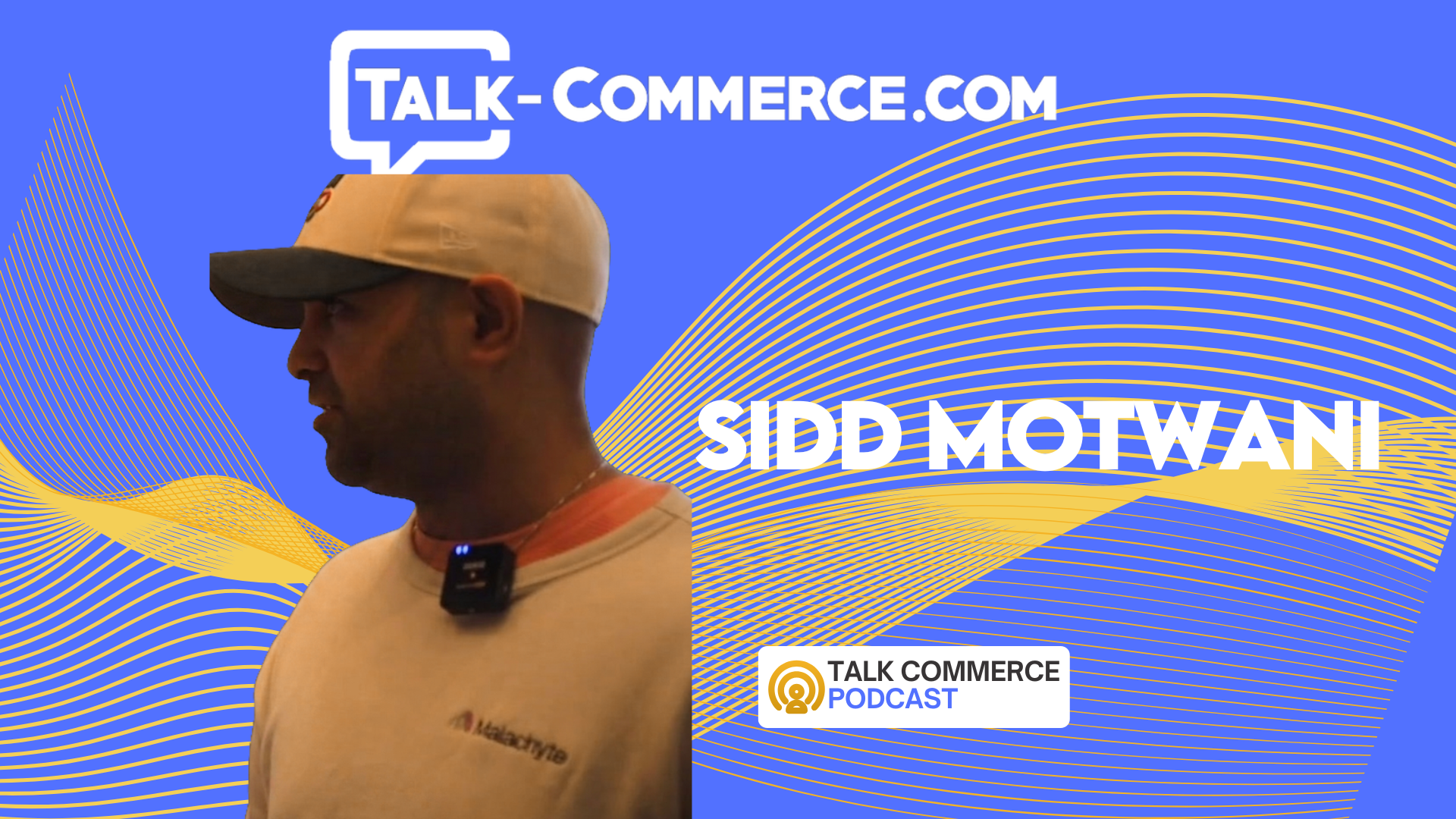
Product Recommendations and Personalization Before the First Click with Sidd Motwani of Malachyte
Recorded live at eTail Boston 2026. Listen to the episode:
Sidd Motwani spent the week at eTail Boston moving between the data and AI track, where he moderated panels on A-B testing and democratizing user data, and the Malachyte booth, where a banner reading Behavior Intelligence for Consumer Commerce summed up the company he co-founded and now runs as CEO. When Isaac sat down with him, the conversation went straight to the technology underneath the pitch.
“We do real-time personalization at scale. So we are specifically a deep tech infrastructure technology company where we generate a profile of a user without any information needed about them, so no third-party cookie, user history, signing in required.”
The core of the system is what Malachyte calls a user vector.
“A user vector is the future of user profiles, and it’s a numerical representation of each user’s preference and intent, and it can proactively retrieve from a catalog of products and surface recommendations that are highly relevant to each and every user’s intent right now and overall preference as a whole.”
The Spotify story behind the technology
Sidd and his co-founder did not invent this approach for commerce. They built it at Spotify, where his co-founder had worked on the underlying technology since 2015 and Sidd led product for the user vector platform itself.
“My job was ultimately to build a platform around the technology and get the entire Spotify ecosystem to use the underlying user vector. And today it powers 90% of the application across music, podcasts, and audiobooks.”
Anyone who has wondered why the recommendations on that app feel dialed in has encountered a user vector at work. Malachyte is the same architecture pointed at commerce catalogs instead of songs.
Personalizing before the first click
The claim that separates Malachyte from the personalization tools most merchants know is timing. Most systems need behavior before they can respond to it. Malachyte starts earlier.
“Generally traffic comes to these websites from like Google, TikTok, Meta, Pinterest, right? We’re able to use those signals in addition to time of day, day of week, device, and location and immediately personalize before a first click, before anything. And as they’re engaging, rapidly learn and improve.”
The personalization runs across the shopping journey, from search and product listing pages through product detail pages, add-to-cart, and email. The company announced itself publicly a few days before the conference and is running a free pilot for Shopify and Salesforce Commerce brands, with the Malachyte team handling the integration work.
“They can get a free demo and an audit on our website. They just have to put in their email. They’re gonna get a personal note from me with a demo that essentially walks through what the technology would look for their current commerce store.”
Agents and humans both come to the store
Asked for a closing hot take, Sidd went to the question hanging over the whole conference, agentic commerce, and landed somewhere more grounded than the usual predictions.
“There’s so much talk about like agentic commerce, right? Agents coming to store on behalf of the user, and doing shopping. Our general stance is like it’s probably gonna be some combination of both where yes agents will come into the store but users and humans will come into the store too.”
The word he kept returning to was proactivity, and his reference point was the same one behind his technology.
“When you open TikTok, you get a for you page, and they have a billion user generated content and a billion users, and they pick one UGC for each user, the point of them opening the application. So they’re proactively picking one out of a billion options for each person, and that’s kind of where I believe we’re moving into.”
Whether an agent or a human walks into the store, his argument goes, the store itself has to serve them on arrival, and the technology that does the serving lives at the brand level, not the platform level.
Three things worth taking from this
Cold start is the problem worth solving. Personalization that requires history excludes the visitor who matters most, the one arriving for the first time.
Referrer, device, time, and location are signals a store already has before any click happens, and using them well is the difference between a generic landing and a relevant one.
And the agentic commerce debate looks different from the infrastructure layer. Sidd is not betting on agents replacing shoppers, he is betting that both will show up, and that the store has to be intelligent enough to serve whoever walks in.
Sidd Motwani is co-founder and CEO of Malachyte. This conversation was recorded at eTail Boston 2026. Find him on LinkedIn and learn more at malachyte.com. For more at-event interviews, visit talk-commerce.com/events.